The last note went up in July, and it ended on a promise: to tell you what gets built in the workshop. Summer has come and gone, and the desk lamp stayed on late. Here’s where things stand.
Potch 2.0, and life afterwards

Spring’s big piece of work is behind me. Potch 2.0 is out, the April note already told most of that story, and the app has been living its life since. Two small updates came along in mid-July, published a day apart: 2.0.3 fixed some teething problems (a level calculation that got tangled after adding a victory, a search by date that couldn’t find anything), and 2.0.4 sorted out an article feed that refused to refresh because of an overly faithful cache. The details are on the Potch blog: 2.0.3 and 2.0.4. Nothing spectacular, and that’s exactly the good news: the app is stable, and it runs along quietly.
And then came a lovely surprise. In early August, the French website Margxt devoted an article to Potch: « Potch : l’application qui transforme les petites victoires du quotidien en un jardin à faire grandir », which roughly translates as “the app that turns everyday little victories into a garden you grow”. Everything is in there, the garden, the seeds, the weather, the retrospectives, and one line I’m holding on to: the more you take care of yourself and your daily life, the more your little virtual world grows. When you make everything alone in your corner, seeing your app told by someone else, and told right, does something.
Dawnless Era, a head full of black holes
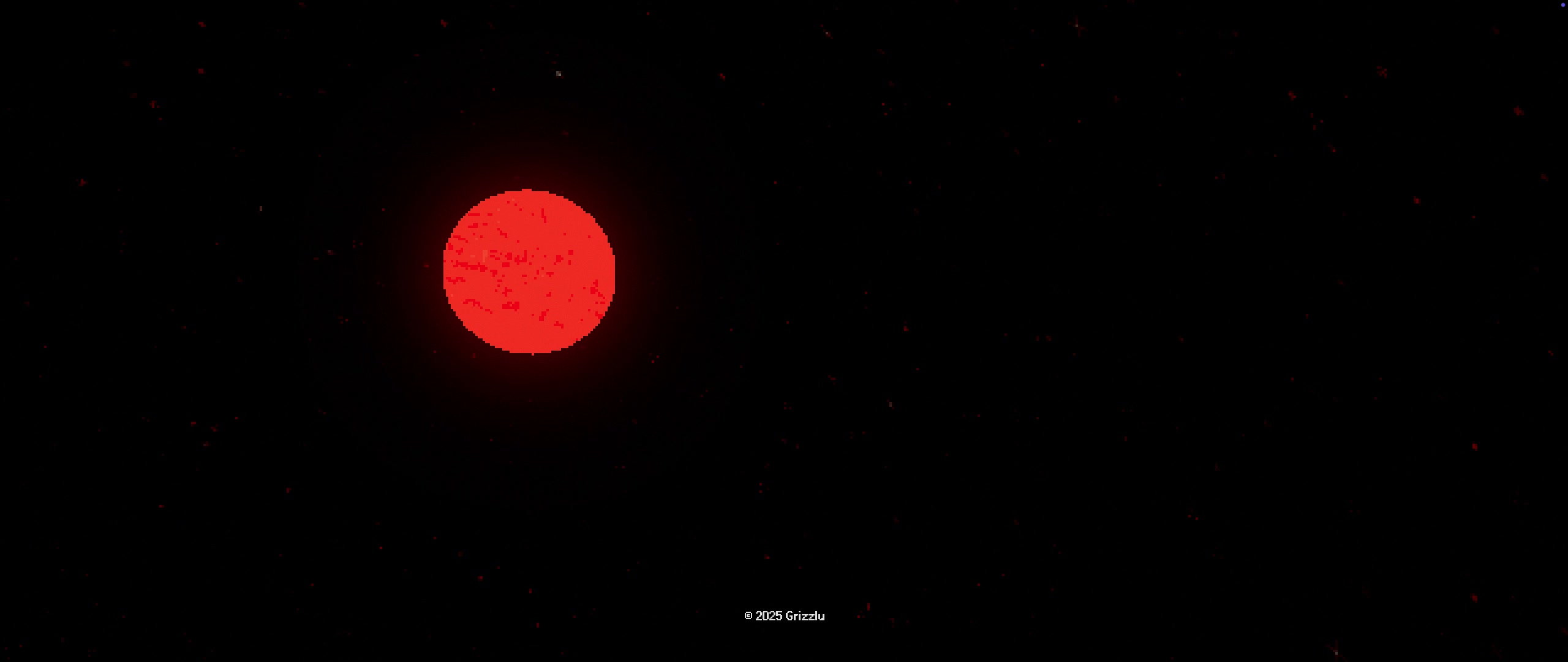
Dawnless Era moves forward in its own way: silently, and on paper. The design document grew thicker all summer, fed by a long stretch of scientific research. The current topic: black holes.
I should admit I have a complicated relationship with them. I love them, I read everything I can get my hands on, and I have nightmares about them. It’s paradoxical, but it makes a kind of sense: the more you know, the more these stars concentrate everything that worries us, the fall, the swallowing, the point of no return. So instead of running away, I dug in.
And the real physics is far stranger than the movie version. Falling towards a black hole, you don’t watch the universe flash by in fast-forward: that effect only exists if you hover, very close to the horizon. Once you cross it, space and time swap roles. The singularity stops being a place you are going to and becomes a moment that is coming, as impossible to avoid as tomorrow morning. Even the black isn’t a colour there: it’s an absence of directions.
One thing led to another, and these readings took me well beyond astrophysics: towards the nature of time, and a few old philosophical questions that haven’t finished following me around.
I’ll stop here, and it’s deliberate. This research isn’t just scenery: it shapes the game’s universe, its art direction, and a few things I’d rather you discover by playing. So I tell the story of the journey, because I love sharing what fascinates me, but I keep what it becomes to myself. It would be a shame to give the game away.
Grizzlu Hi-Fi, the project that wasn’t planned
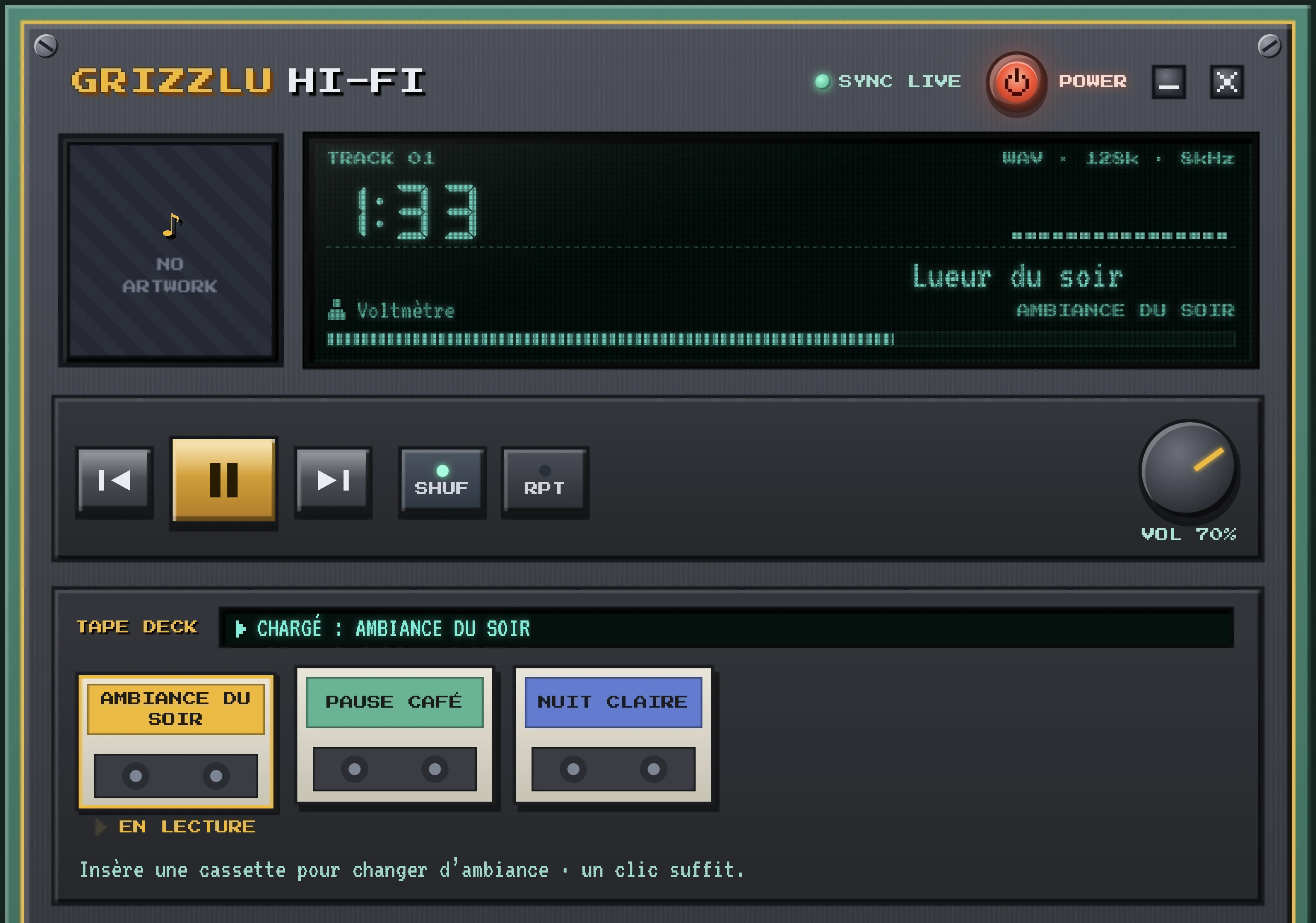
Summer also saw the birth of a project that wasn’t on any list. Grizzlu Hi-Fi is an audio player dressed as a hi-fi deck from another era: cassettes, a dot-matrix display, buttons that actually press in, a little status light. You point it at a folder of music, it turns it into a library, then into a station. And that station can make its playback joinable by other devices on the local network, upon presentation of an invitation link: they all hear the same track, at the same second.
It’s a tool, not a service. The music stays where it is, and there’s no account to create, no directory, no data collection. Its project page has been online since this summer, and the project is currently being tested by a small group of people, in the browser, on iOS and on macOS. No release date yet: it will arrive when it’s ready.
A nest in Japan, the Kokoro Nest website
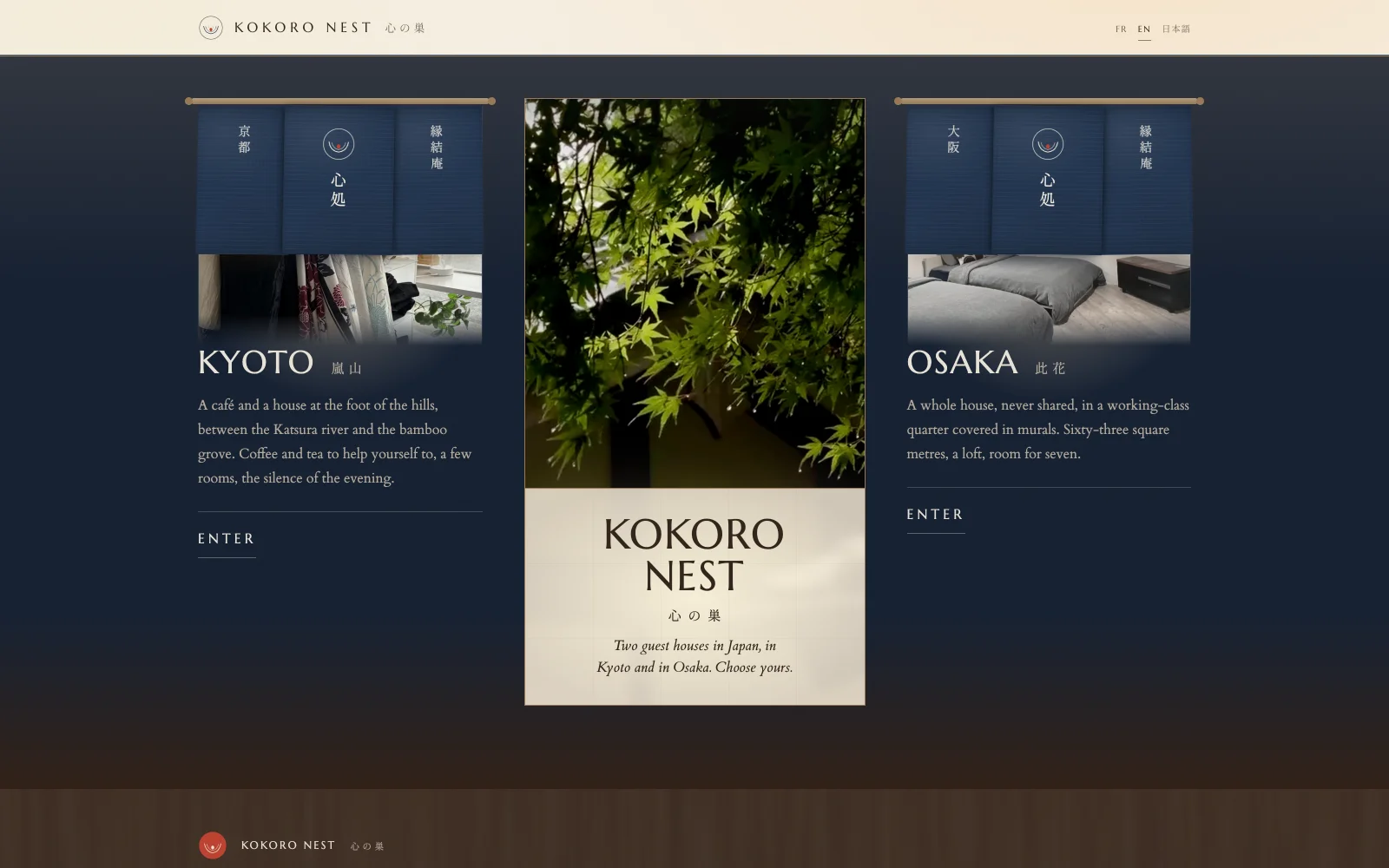
Grizzlu also worked outside its own walls. This summer I designed, built and launched the website of Kokoro Nest, two guesthouses in Japan: one in Kyoto, in the Arashiyama district, with its self-service café, the other in Osaka, one station away from Universal Studios. The site has just opened its doors: kokoronest.jp.
It’s a website that speaks Japanese all the way into its interface. You enter each house by parting a noren, those curtains hung at shop entrances, and a shoji panel lets you glimpse a video of Arashiyama behind its paper. Three languages (English, French, Japanese), zero cookies, zero trackers, OpenStreetMap for the maps, and self-managed hosting, like grizz.lu.
My favourite moment of the whole build was the review: the owner annotated everything by hand, on a thirty-two page printed booklet. Their corrections shaped the site as much as my mockups did. I now look after its technical upkeep day to day, and it’s a lovely first for the studio: a website made for a very real place, one you can visit with something other than a browser.
What’s next?
If these notes have grown further apart, it’s not only because of the projects: I’m writing these lines from Japan, where I’ve settled for a while to learn the language. Between classes and the workshop, the days are full, but the bear always finds a moment to tinker. ʕ•ᴥ•ʔ
So, what’s ahead: Dawnless Era keeps being written, Grizzlu Hi-Fi carries on with its tests, and Potch lives its life. To follow along more closely, there’s the studio’s Discord, the newsletter at the bottom of the page, or simply a word by the fire. 🐾
Written by Grizzlu
← Back to news